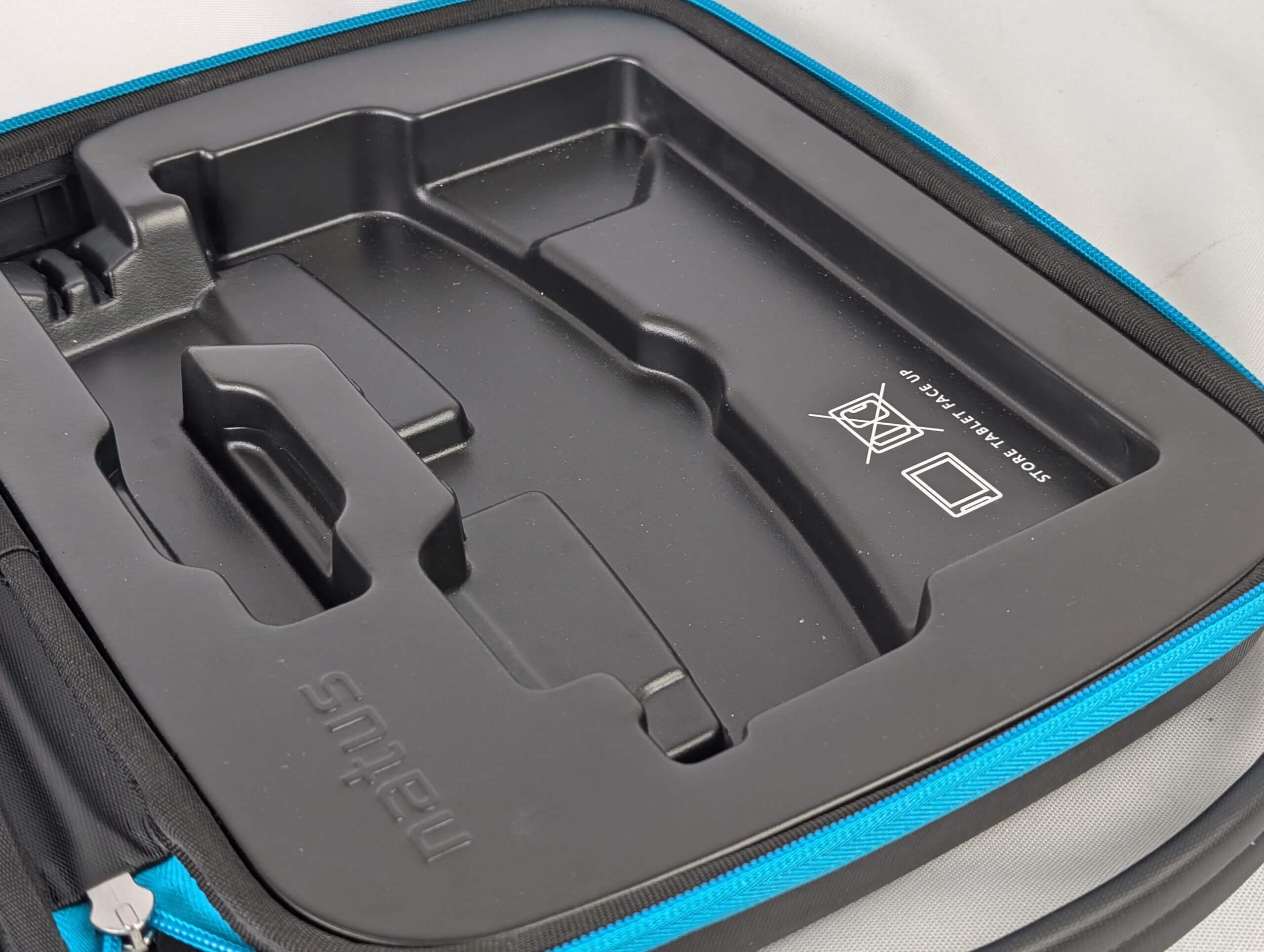
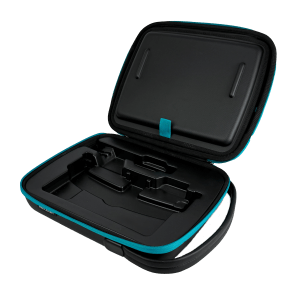
 Custom case foam inserts can be tailored to fit a wide range of applications. They protect valuable items, support precise organization, and make the inside of your case as intentional as the outside.
In order to ensure that you choose the right custom foam insert for your case, you must determine your needs, and ask the questions necessary to choose the right materials to accomplish your goals.
At Shell-Case, our job is to help our clients navigate this process. We’ll walk you through the process – ask you the questions necessary to truly ascertain your needs and, tapping into our extensive experience and knowledge, we’ll ensure that you choose the right insert for your device case.
Some questions we might explore are:
Does your device require a dust-proof insert?
Is your device going to be deployed in rugged conditions which require lightweight but protective materials?
Will this case need to be easy to cleaned or sterilized?
These and many more factors will determine the best technologies and materials for your case and its foam insert.

Understanding the Role of Foam Inserts
Custom foam inserts are typically cut to match the contours of your product, creating snug compartments inside the case to hold everything in place. The foam acts as a shock absorber, minimizing movement during transport and reducing the risk of damage. It also helps with presentation, accessibility, and branding.
Foam inserts are widely used across industries – from medical devices and electronics to industrial tools and defense. When chosen wisely, they enhance product protection and provide peace of mind in transit, storage and usability of the device.
The Advantages of Foam Inserts
- Lightweight: Adds minimal weight to the carrying case.
- Low NRE (Non-Recurring Engineering) Costs: Relatively inexpensive to design and produce.
- Flexibility in Production Quantities: Suitable for both small and large production runs.
- Short Turnaround Production Time: Can be manufactured relatively quickly.
- Excellent Cushioning and Shock Absorption: Provides superior protection for delicate items.
- High Organization Level: Keeps items neatly arranged and easily accessible.
At Shell-Case, we work closely with clients to evaluate their requirements and guide them to the best-fit solution. This level of expertise can prevent costly missteps—like designing a foam insert with non-produceable tolerances or incompatible radii.
Exploring Materials Used in the Manufacturing of Custom Case Foam Inserts
The term “foam” encompasses a wide range of materials – each with different characteristics in terms of density, appearance, cushioning, and cleanability. A variety of foam materials are used to create inserts, each offering unique properties and suitability for different applications. These materials are available in various hardnesses, densities, and colors to meet specific needs.
- Cross-linked Polyethylene (PE): A closed-cell foam that is rigid, durable, and resistant to water and chemicals. Suitable for heavier items and high-impact applications. Click here to see an example

Cross-linked Polyethylene (PE) foam insert
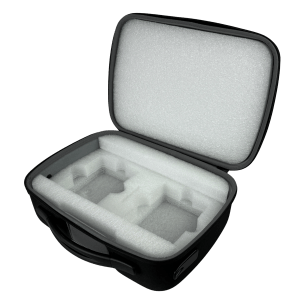
- Polyurethane (PU): A lightweight, open-cell foam known for its excellent cushioning and shock absorption. Ideal for lighter, more fragile items. Click here to see our Hybrid foam case

Polyurethane (PU) Foam
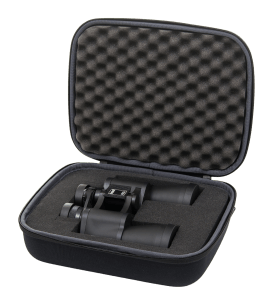
- Memory Foam: Conforms to the shape of the items it protects, providing excellent support and shock absorption.
- Expanded Polyethylene (EPE): Similar to PE, but with a slightly less density.

Expanded Polyethylene (EPE) Foam Insert
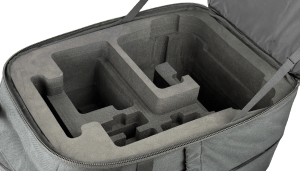
- Ethylene-Vinyl Acetate (EVA): A lightweight, semi-rigid foam offering a balance of cushioning and impact resistance.
Check out our EVA Case For Laser Device, this case was customized to ensure that it’s precious cargo, an optic device, would not accumulate dust. Another great example of a dust-free interior is our branded carrying case for dentist loupes. - Molded PU: Polyurethane foam that is molded to a specific shape. offering complex 3D surfaces. The surface can be wiped and cleaned and offers great chemical stability.
Many cases require easy-to-clean and wipeable cases and inserts, for this, you might choose the material PU.
Molded PU foam insert